THE TECHNOLOGY
A RAS platform
designed for flexibility.
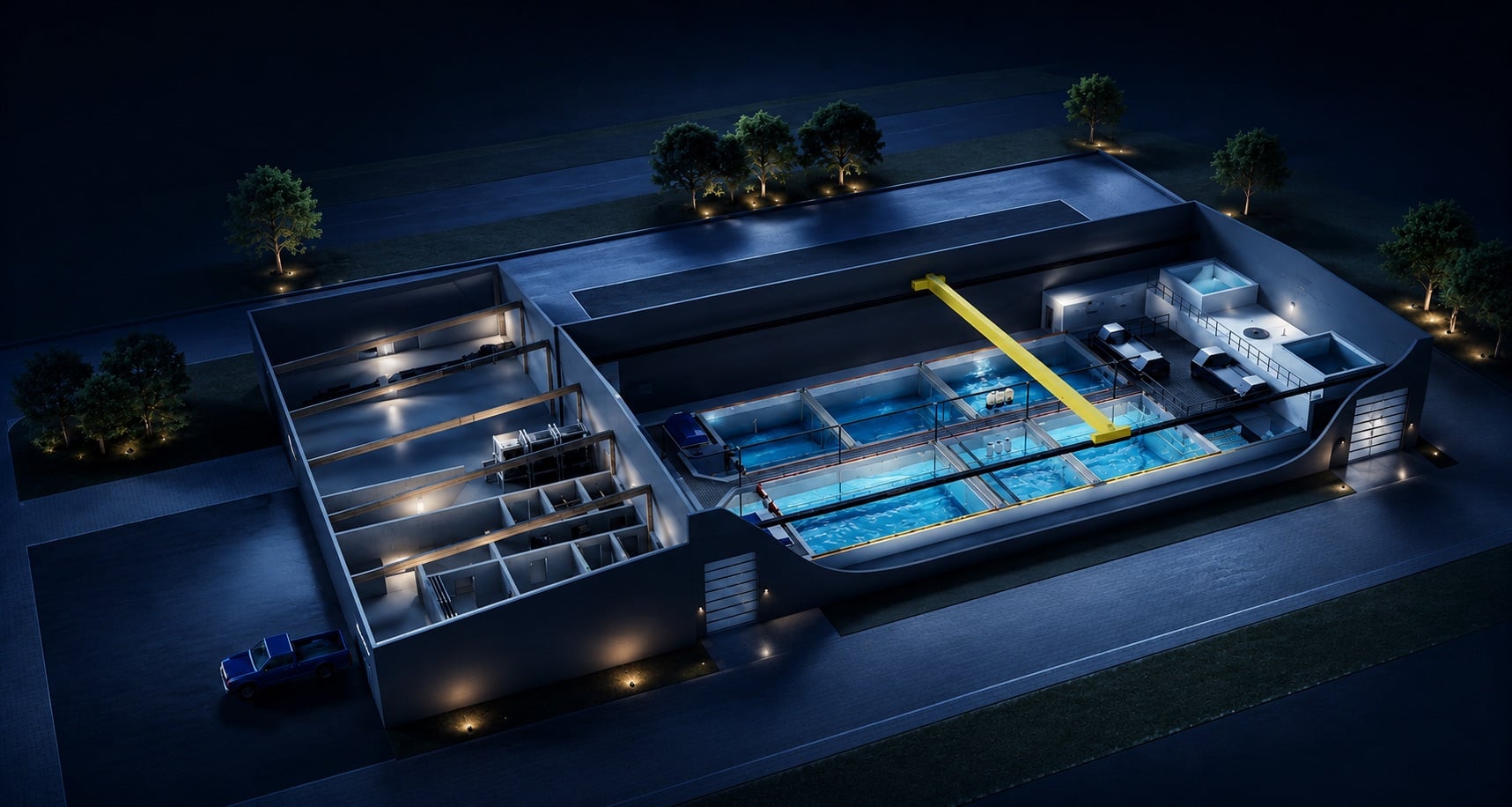
Oceanloop redefines conventional RAS with a modular raceway system that adapts to species, stocking intervals, harvest sizes and demand — built for low head loss, high water quality and gentle animal handling.

Generated or edited using AI
WHY DESIGN MATTERS
Aquaculture is biology. Technology has to stay flexible.
Many conventional RAS farms are designed around fixed round tanks and long pipe systems. As biomass changes, animals often need to be moved, circulation loses energy and hard-to-control zones create quality and welfare risks. Oceanloop was engineered to solve these challenges at the system level.
CORE DIFFERENTIATORS
Not a conventional RAS farm.
<0.5%
Closed Water Cycle
Oceanloop keeps seawater in the loop and replaces only small losses from solids separation, sludge discharge and evaporation.
~60%
Low-Head Raceway
The raceway layout reduces head loss; around 60% energy savings for recirculation vs. conventional design.
4–6 cm/s
Plug-Flow Design
A stable, laminar flow improves self-cleaning, water exchange and feed distribution for excellent water quality.
4×/hr
High Recirculation
Water is filtered repeatedly and rapidly, reducing daily concentration spikes and keeping conditions stable.
Several tanks in 1
Multi-Batch Stocking
Movable flow-through walls allow multiple size classes in one raceway for continuous, year-round harvest.
WATER QUALITY
Efficient water treatment, clear water, stable biology.
The Oceanloop water treatment system combines mechanical, biological and chemical processes — drum filtration, foam fractionation, nitrification, denitrification, degassing, oxygen injection, buffer dosing and backwash recycling. The goal is simple: keep water quality stable so animals perform and the product stays clean.
Generated or edited using AI
OCEANLOOP MODULES
Scalable from R&D to industrial.
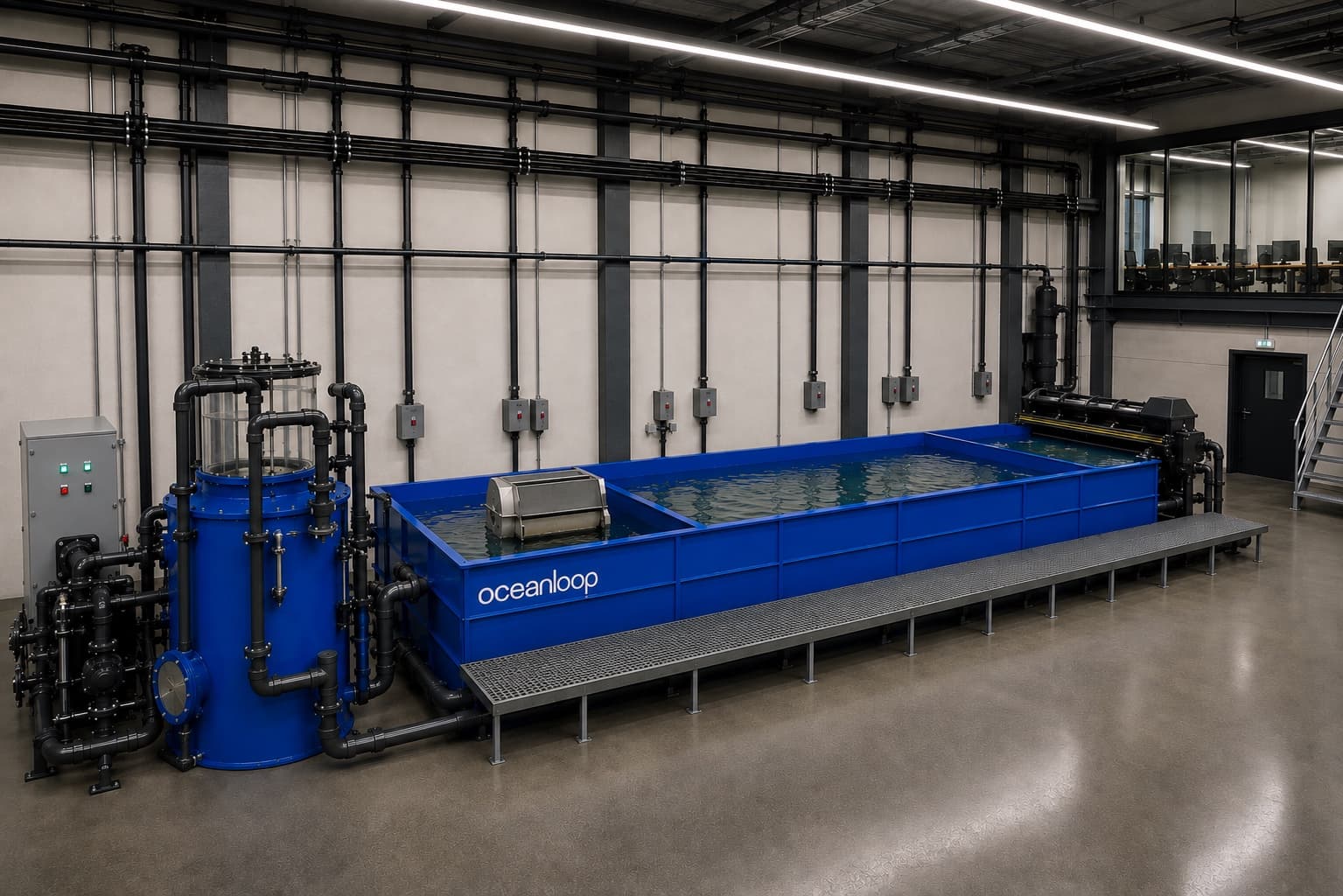
Oceanloop 100
40–100 m³
Research & development
Oceanloop 100 is a compact, modular RAS platform developed for research institutes, universities, startups and entrepreneurs entering land-based aquaculture. It enables applied research, species development, technology validation and operator training while providing a scalable foundation for future commercial production.
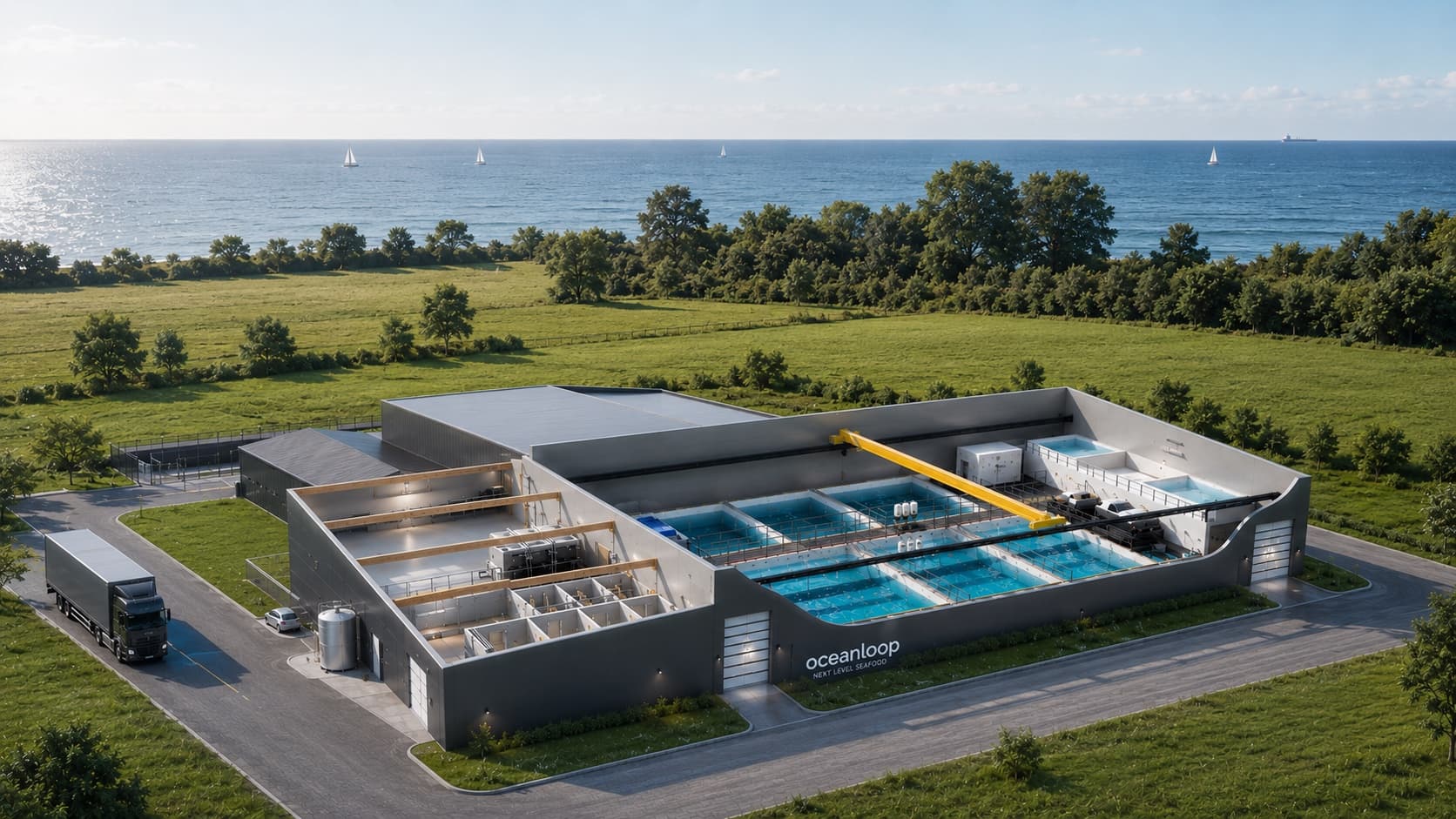
Oceanloop 1,000
1000 m³
Proof of concept & market entry
Oceanloop 1,000 is the ideal first commercial production unit for companies entering land-based aquaculture. It enables market entry, operational validation, customer development and staff training while creating the foundation for future expansion to industrial-scale Oceanloop farms.
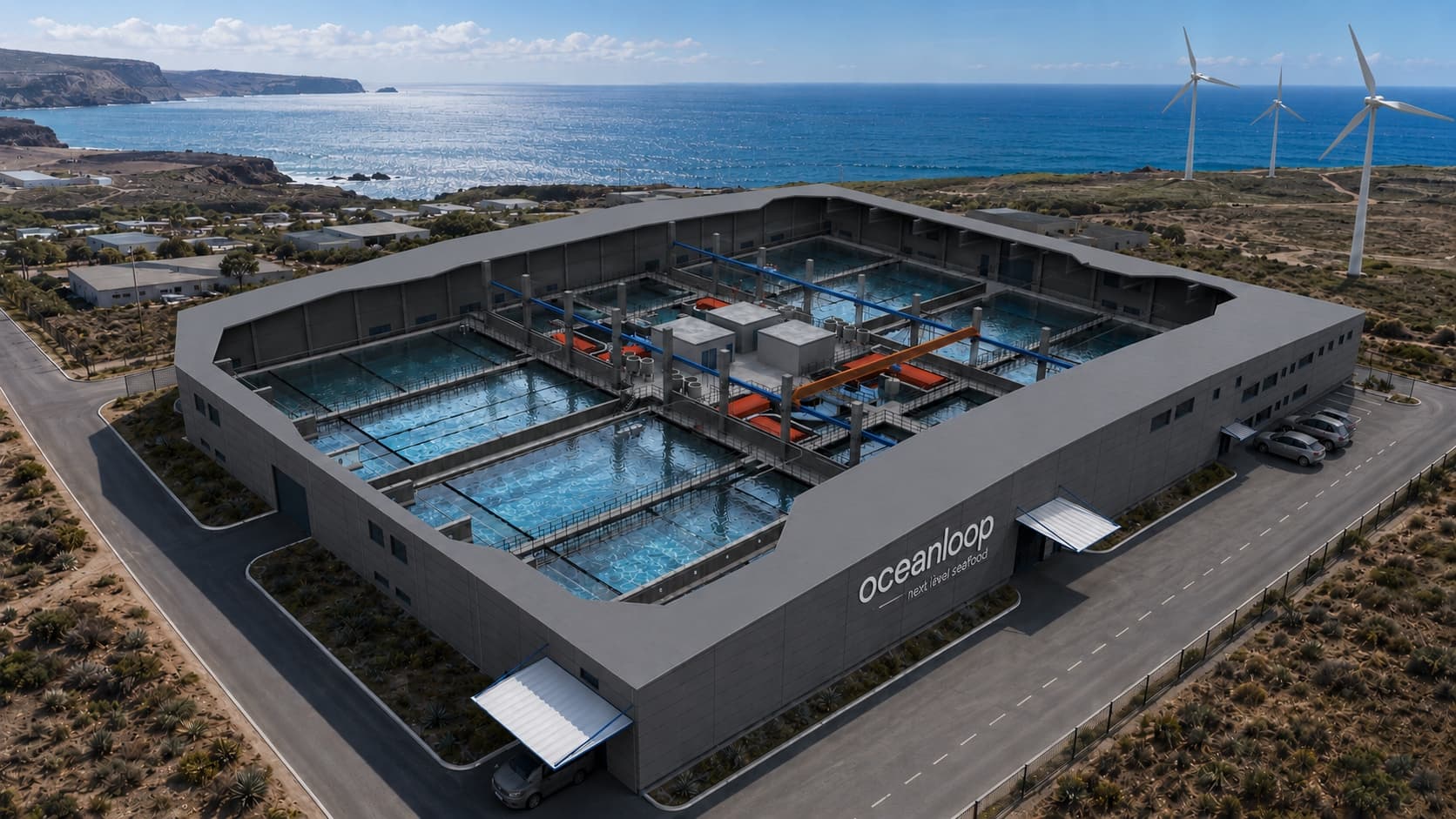
Oceanloop 4,000
4000 m³
Market development
Oceanloop 4,000 is a fully industrial production platform designed for large-scale seafood farming and international rollout. It combines standardized engineering, advanced automation and proven RAS technology to enable efficient local production through Oceanloop-operated farms and licensed partner projects worldwide.
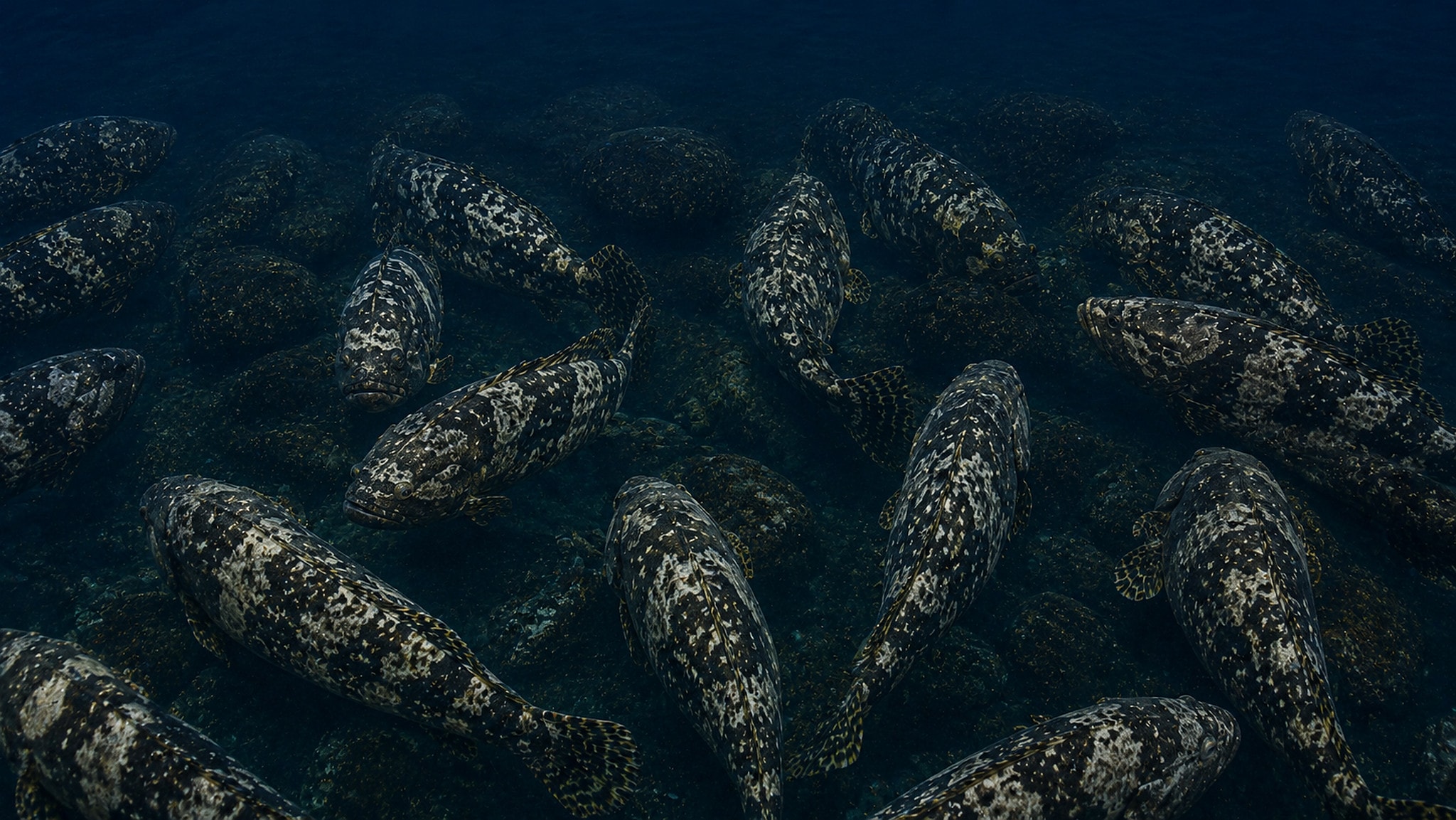
OCEANLOOP CO-PILOT
Digital tools connecting every Oceanloop farm.
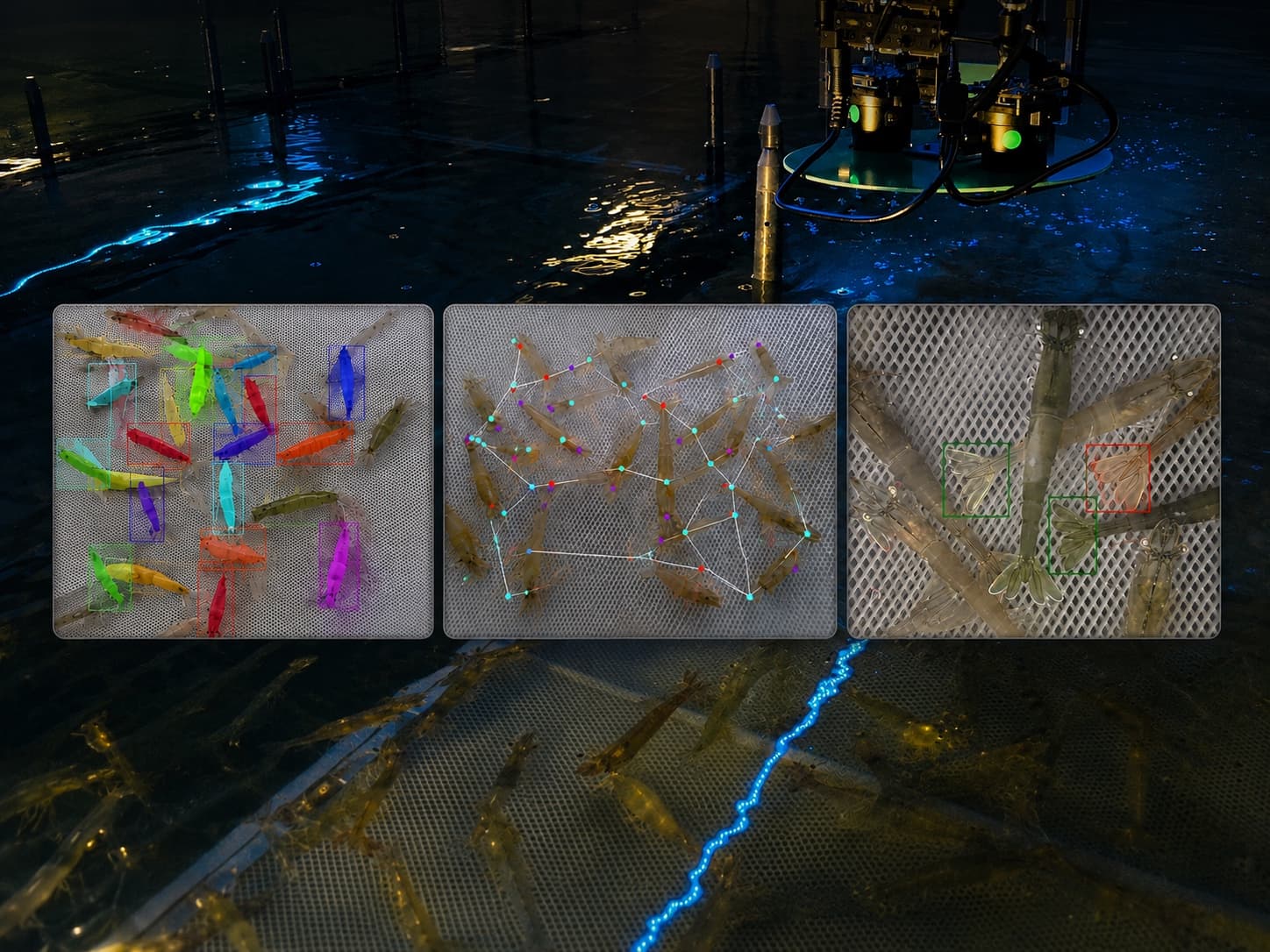
Oceanloop is developing digital tools that combine operational farm data, laboratory analytics, sensor technology and computer vision into a single decision-support system. The tools aim to supports biomass estimation, fish welfare monitoring, water quality management, predictive maintenance and energy optimization, helping operators better understand and manage complex biological production systems.
Building on several research projects, including ShrimpWiz and SEADEEP, Oceanloop continues to expand its digital capabilities through AI and data-driven analytics. The objective is to further improve operational efficiency, reduce biological risk and support stable production conditions over the entire farming cycle.
Today, several digital tools are used across Oceanloop's own operations. As the tools continue to evolve, it is intended to connect future Oceanloop farms and, over time, licensed partner facilities, enabling standardized monitoring, operational benchmarking and the continuous sharing of best practices across the Oceanloop network.